
The power of environment reveals itself best through transformation. A room that shifts from frenzy to serenity not only changes visually, it alters cadence of living. The phrases before, after, and calm become tangible markers of evolution when a home transitions from visual dissonance to natural grace. These before after calm stories prove that tranquility can be engineered with intention, not happenstance. When we witness before after calm design in motion, we see how materiality, light behavior, and spatial syntax reshape the way a home feels and functions.
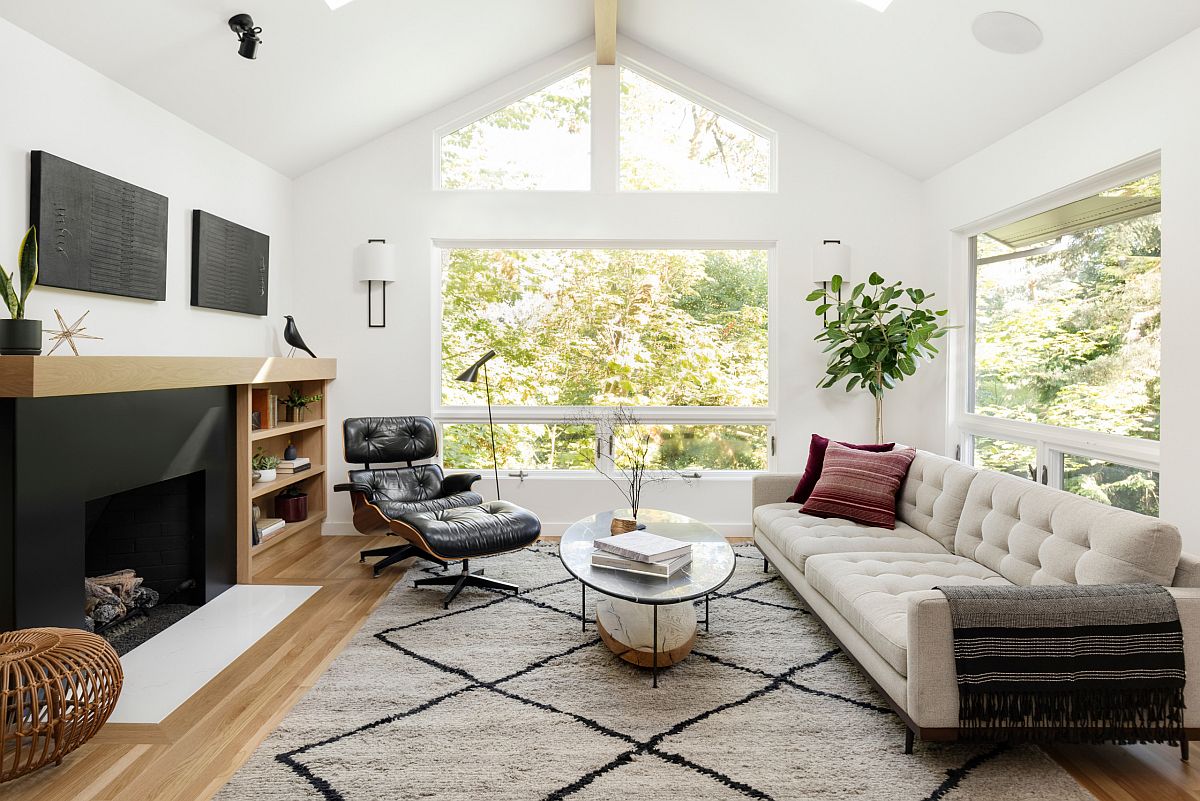
1. The Cluttered Living Room to Quiet Grove Lounge
Before: The average hyper-utilized living room begins in overstimulation. Shelves bristle with uncurated memorabilia. Furniture blocks circulation. Color competes. Light reflects too sharply off plastic surfaces, creating what designers call “glare pollution,” where illumination overwhelms rather than calms.
After: The same room becomes a Quiet Grove Lounge by subtractive editing. Dematerializing visual clutter frees cognitive bandwidth. Walls painted in powder-matte neutrals recede politely. The seating plan is redrawn for circular, conversational orientation, using cotton-linen upholstery in soft, undyed shades. A raw jute rug replaces synthetic pile, anchoring the floor without chromatic tension. Shelving is curated to a maximum of three tonal categories, wood, clay ceramics, and transparent glass. The result is atmospheric decompression. Sound moves differently here, less echo, more hush, thanks to natural fibers. The room feels like a forest clearing without imitation, because the materials are innately natural, not themed.
Short truth: less is more. Longer truth: less becomes calm when paired with nature-centric intention.
2. The Dim Kitchen to Luminous Herbarium Galley
Before: Dim kitchens conceal mess poorly. Shadows compress the room. Dark cabinetry absorbs joy. Laminated counters reflect light too harshly and show fingerprints like evidence. Ventilation is an afterthought, trapping cooking residues in the air.
After: A Herbarium Galley uses light as the main material. Cabinets are sanded timber in open-grain finish. Handles shift to brushed bronze, patina-friendly metalwork that ages softly. The countertop becomes honed limestone, forgiving and matte. Lights are repositioned in layers: overhead linen-diffused pendants, under-cabinet LED warmth, and a small windowsill herb garden that adds aromatic movement. Basil, mint, and rosemary produce a soft aural scent, an uncommon design term referring to environments intentionally enhanced by live, fragrant greenery. Ventilation shifts from mechanical noise to silent airflow using aperture optimization, slightly opening two opposing windows for cross-ventilation elegance.
Short advice: brighten it. Longer advice: make it glow with layered logic, not glare.
3. The Overbusy Bedroom to Dawn-Soft Rest Chamber
Before: Bedrooms often begin as reactionary storage units. A chair hosts folded laundry. Bedside tables pile high with cables, lotions, discarded notes, and impulsive purchases. Blue-white lighting mimics day poorly, jerking the circadian rhythm awake at night.
After: The Rest Chamber uses dawn-soft lumens, amber-leaning lighting with low Kelvin values, between 2200K and 2700K. Curtains shift to heavyweight linen with micro-slub imperfections for artisanal character. The headboard becomes rattan weave, adding gentle depth without changing color family. Bedside tables hold only functional essentials. Cables retreat into fabric sheathing in matching wall tones, a practice known as visual camouflaging. The laundry chair becomes a minimalist wall hook with one canvas tote below for collection. The bedding adopts tactile neutrality, cotton-wool blend in soft cloud tones. The air feels different. The mind sleeps more willingly here, because the space finally behaves like night.
Short note: make it dark. Longer note: make it dark kindly.
4. The Stark Home Office to Balanced Earth Writing Desk
Before: Offices at home begin in digital chaos. Black monitors dominate sightlines. Plastic chairs squeak against laminate flooring. Artifacts shout corporate, not calm. The result is productivity anxiety, where the room feels like obligation.
After: The Earth Writing Desk uses balanced ergonomics and biophilic accents. A timber desk with curved edges softens visual geometry. Chairs adopt wool-blend fabric with silent glide footpads. Monitor frames switch to off-black charcoal, matte and recessive instead of stark. A ceramic mug, unglazed, replaces industrial drinkware. A single potted plant, broad-leafed pothos or fiddle fig, sits in peripheral vision for mood chlorination, a playful interior jargon for “greening the brain’s ambience.” Storage shifts to natural sisal boxes. The backdrop becomes a textured lime plaster wall, faintly porous, micro-irregular, intentionally imperfect.
Short lesson: soften the office. Longer lesson: soften the obligation.
5. The Bathroom That Echoed to Spa-Soft Wash Retreat
Before: Echoing bathrooms distort calm. Hard tiles and high gloss finishes create sound ricochet. Overbright lights flatten features. Bottles form clutter. Towels feel like afterthought.
After: The Wash Retreat redesigns sensory impact. Tiles are matte travertine or natural stone composite with low reflection index. Lighting layers create facial dimension. Towels shift to eucalyptus blend, fast drying, silent, and naturally soft. Bottles decant into glass or clay containers. A small timber stool replaces plastic shelving for ritual simplicity. The space dries faster, sounds quieter, feels calmer.
Short opinion: make it clean. Longer opinion: let cleanliness feel like a ritual.
6. Hallways That Were Blocked to Nature-Flow Corridor
Before: Hallways congest circulation, visually and physically. Shoes, bags, hooks, jackets, and mail block movement. Narrow spaces amplify stress.
After: Nature-Flow Corridors work by kinetic minimalism. A single console in oak or acacia holds a clay bowl for keys. The wall adopts a single art piece in muted natural tones, framed minimally. Shoes drop into one dedicated basket or drawer. Jackets retreat. The corridor moves like breath, inhale, exhale, walk, pass, pause, move.
7. Dining Table That Was Noisy to Communal Calm Table
Before: Visual noise disrupts appetite. Patterned tablecloths fight dishware. Chairs creak. Centerpieces draw too much focus.
After: Communal Calm uses tactile neutrality. A light linen runner grounds without pattern war. Chairs glide softly. Vases shift to ceramic or micro-bubbled glass. Centerpiece is functional: flowers, fruit, or a candle. Appetite behaves better here.
8. Windows That Glared to Filtered Haven Apertures
Before: Unfiltered windows bring glare, not calm. Light behaves like intrusion, not invitation.
After: Filtered Haven windows use sheer cotton-linen blends or micro-screen filters, shaping illumination into soft intrigue instead of glare. This is light syntax at its finest, where brightness feels generous, not invasive.
9. Corners That Were Empty to Corner Sanctuary Nooks
Before: Empty corners echo neglect.
After: Nooks hold intention: a rattan chair, linen throw, a clay pot plant, a small teak table. Corners finally feel emotionally resolved.
10. The Overall Moral of Before & After Calm Design
Transformation always teaches more than decoration alone. Before after calm design is less about trend, more about sensorial intelligence. The goal is not to decorate calm. The goal is to design for calm to happen naturally. When materials, airflow, acoustics, lighting temperature, color unity, spatial grammar, and physical circulation behave together logically, a home feels different. It lives different. And best of all, it becomes calm without asking permission to be.
More Stories
Cozy Roots: Designing Home Sanctuaries with Nature’s Palette
Biophilic Home Design: Bringing Nature Indoors for a Healthier, Happier Life
5 Ways to Bring the Outdoors Inside with Biophilic Home Design