
Calm natural interiors come with a cozy handbook of do’s and don’ts. Yet some of the most memorable rooms emerge when you playfully bend the guidance. There’s a quiet rebellion brewing in design, one where calm rules break becomes a creative invitation rather than a disclaimer. Because sometimes calm is amplified, not diminished, by strategic rule-breaking. And the best part? You can do it happily, confidently, and beautifully.
1. The “All Neutrals Only” Mandate
Yes, neutrals are the native language of calm spaces. But tossing in a controlled pop of pigment can actually increase serenity through contrast balance, a lesser-known theory called chromatic punctuation. A soft olive-green cabinet or muted terracotta accent wall complements natural palettes without triggering visual dissonance. The trick is tonal tethering, keeping the added hue within nature’s spectrum. Calm doesn’t demand absence of color. Calm demands harmony of color relationship.
2. “One Texture, Keep It Minimal”
Many guides nudge you toward a singular textural family. But layering textures is pleasing when done with tactile choreography, the artful arrangement of surfaces to guide emotional flow. Think jute underfoot, linen on the sofa, a ceramic side table with a slightly unglazed finish, and a boucle throw. Multiple textures create soft sensory boundaries. They make a room feel curated, calm, and cocooned, without clutter. Texture layering isn’t noise. It’s nuance.
3. “No Dark Anything”
Deep colors are wrongly accused of stress induction. When balanced correctly, darker elements absorb light like velvet absorbs sound, a principle known as luminous dampening. A dark walnut coffee table, or a graphite lamp base, grounds the room. Darkness becomes a calm anchor, not a mood thief. As long as your light layers are warm and diffused, dark décor becomes spatial ballast, stabilizing the entire aesthetic.
4. “Symmetry Always Equals Calm”
Symmetry often works. But asymmetry can deliver emotional ease too. Enter visual jazzing, a design philosophy that uses uneven groupings, or staggered heights, to mimic natural spontaneity. A leaning floor mirror beside a single potted ficus, or mismatched bedside tables, creates gentle unpredictability. Calm natural rooms don’t have to be arranged like a museum. They can be arranged like a breath, organic, fluid, unforced.
5. “Art Must Be Almost Invisible”
Art can whisper, but it can also sing softly. A slightly oversized landscape piece depicting mist or sand dunes adds what designers call narrative calm, scenes that pull your mind into a slower internal pace. Large art gives the eyes one focal job. One gentle place to land. That simplifies mental processing. Calm is sometimes louder than subtle. And that’s okay.
6. “Closed Storage Only, Open Shelves Feel Messy”
Open shelves aren’t a calm violation if styled with mindful sparseness. When you use negative spacing, the intentional use of blank shelf zones, open storage becomes decorative silence. Add a single vase from Muji, an unvarnished wooden bowl, or curated travel ceramics you collected, spaced generously apart. Open storage works if it feels like breathing room, not display pressure.
7. “Plants Need to Be Small and Scattered”
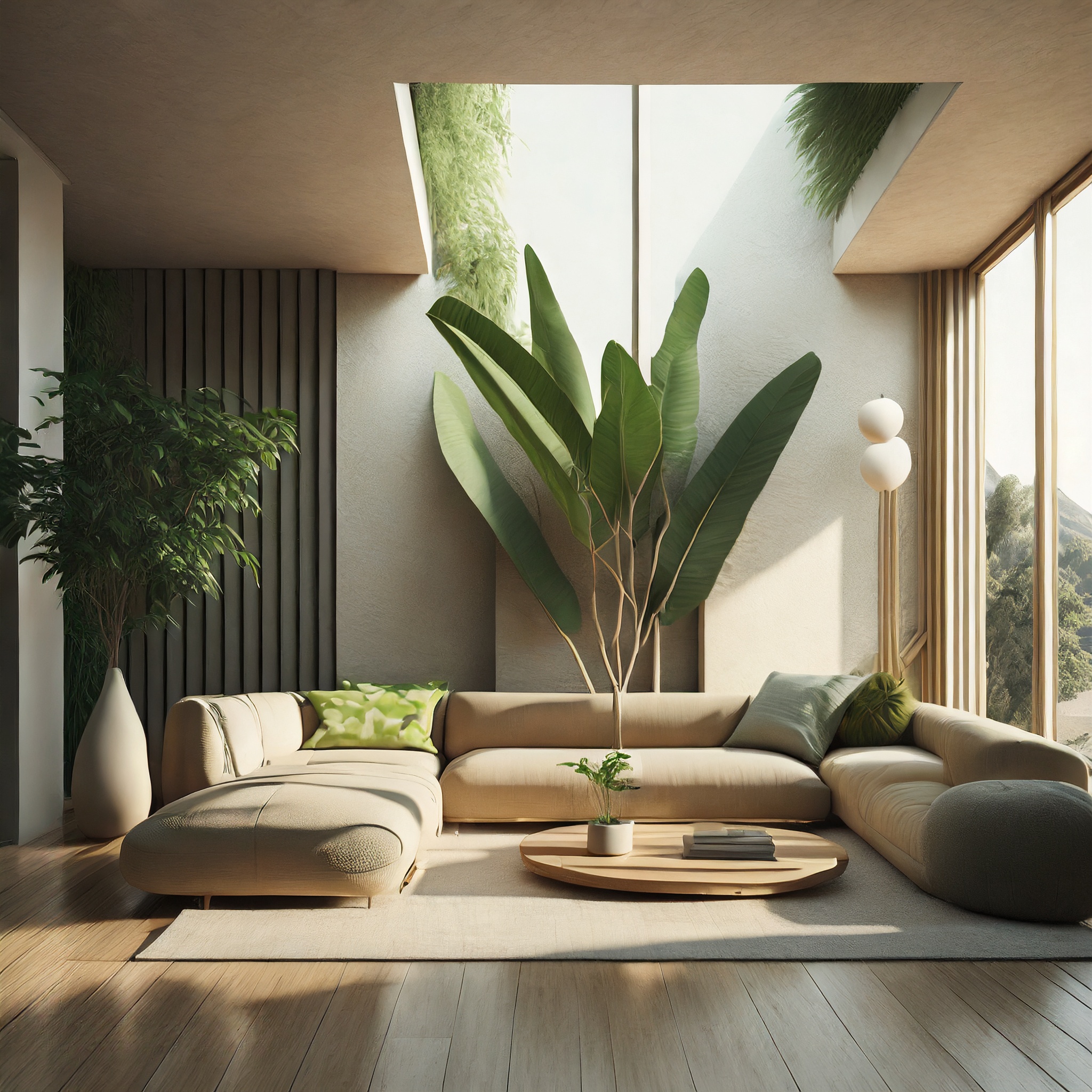
Healthy rule to start. But you can break it by choosing one statement plant instead of seven mini ones. A tall dracaena or bird-of-paradise adds upward calm, lifting the gaze to reduce spatial tension. Vertical greenery engineering amplifies biophilic calm without demanding too much maintenance or visual busyness. One big plant can do the emotional labor of many small ones.
8. “All Fabrics Must Be Light Colored”
Light fabrics help reflect light. True. But heavy or darker fabrics build calm through softness density, textiles that feel substantial and slow energy visually. A warm russet curtain or chocolate linen cushions deepen the mood, add comfort, and soften the space. Soft surfaces don’t need pastel colors. They need emotional softness.
9. “No Bare Floors”
Bare floors don’t have to be cold. Polished microcement or light natural oak planks create a clean foundation, especially in tropical climates where rugs may feel oppressive. This restraint technique is called climatic calm design, adapting calm décor to environmental conditions so the room feels comfortable for the weather, not just the eyes.
10. “Match Everything to Nature Literally”
You can break this rule by referencing nature metaphorically. A seashell-smooth wall plaster, or a couch cushion arranged like mossy stones, or a hand-thrown mug imperfectly finished, captures nature without imitating it rudely. This poetic abstraction is known as bio-suggestive styling, décor that hints at nature instead of copying it bluntly.
11. “Avoid Patterns Fully”
Patterns intimidate calm spaces only when overly complex. Soft, low-contrast geometrics or watercolor-washed motifs restore calm without chaos. This rule bends well when you rely on pattern muting, designs that dissolve gently into the room’s background frequency. Patterns can exist, just keep them calm, ghostly, kind.
12. “Calm Means Quiet Personality”
The biggest myth of all. Calm rooms can show personality without shouting. Personality can be infused through anecdotes, textures, curated objects, even daring furniture forms. Calm is not absence of self. Calm is mastery of sensory editing. A calm space with personality feels authentic, thoughtful, gentle, and inviting.
The Calm Conclusion
Rules are helpful until they feel restrictive. The magic happens when you edit purposefully, break selectively, and balance confidently. A calm natural interior is not a cage of restrictions. It’s a playground of sensory poise. You can break many guidelines, without breaking the calm. You can enjoy creative liberty, without losing peace. And that is the art of happy interior crafting.
More Stories
Cozy Roots: Designing Home Sanctuaries with Nature’s Palette
Biophilic Home Design: Bringing Nature Indoors for a Healthier, Happier Life
5 Ways to Bring the Outdoors Inside with Biophilic Home Design