
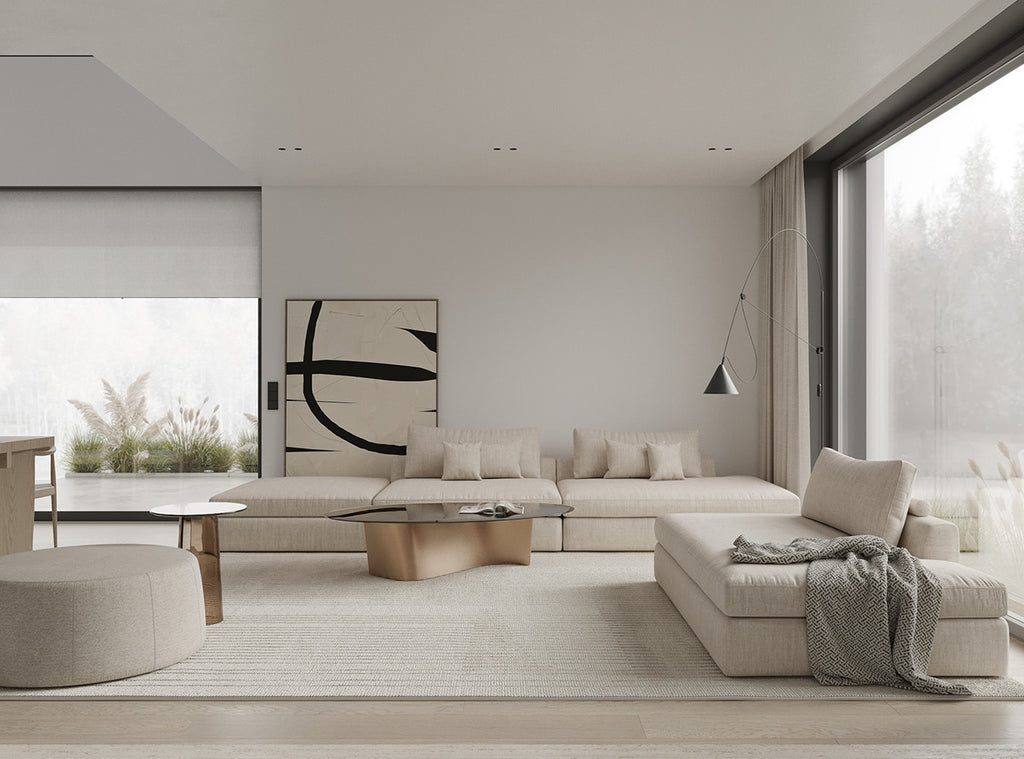
Soft minimalism is the evolved relative of stark reductionism. It focuses on visual ease, tactile warmth, and gentle spatial logic. When it intersects with nature-led design, the result is deeply grounding. The philosophy behind soft nature minimal is simple yet refined, inviting spaces to stay uncluttered but never unlived, pared back but never cold. This style leans on quiet curves, translucent textiles, muted palettes, and botanical resonance, creating rooms that calm the nervous system without shouting about simplicity. It offers minimalism with a pulse. Natural interiors with a soft heartbeat.
Understanding the Aesthetic Provenance
Classic minimalism favors sharp edges and an almost monastic quiet. Soft minimalism bifurcates from this path. It introduces organic lines and sensory gentleness. Materials matter more than objects. Spaces matter more than accents. Instead of subtraction that feels rigid, soft minimalism seeks balanced restraint. You still breathe freely. You still live fully. The room simply removes ancillary noise first.
The layering, a critical component of this approach, relies on subtle articulation. Consider the deliberate pairing of plush wool rugs with honed stone side tables, or unglazed ceramic vessels beside sheer linen curtains. These juxtapositions maintain minimalist punctuation while ensuring nothing feels sterile. Soft minimalism embraces “essentialism,” not erasure.
Palette With Pragmatism
Muted neutrals are the lexicon of calm natural interiors. But soft minimalism punctiliously avoids a flat monotone. It works with diluted tones, like driftwood taupe or vapor washed sage green. Think about colors that resemble soft coastal clouds or forest morning mist. These hues provide tranquility without sensory deprivation. Calm is maintained. Interest is suggested. Confidence is subconsciously supported.
Design psychology shows that rooms rich in natural but low-contrast palettes reduce visual friction, allowing the brain to categorize the environment as safe and restorative. The goal is to set the stage for serenity. And soften cognitive recoil.
The Geometry of Gentling Space
Minimalist rooms often stay rectilinear. Soft minimalism bends those corners figuratively. Rounded mirrors, racetrack oval coffee tables, curved sofas, and softly tapered armchairs form a biomorphic geometry. These shapes speak in nature’s shape language. Soft curves encourage the eyes to wander without agitation, a subtle cacophony-free movement that soothes perception.
Furniture silhouettes are low. Never loud. Pieces do not compete for attention. They collaborate instead.
Elevating Material Vocabulary
Texture becomes the narrative driver. Natural materials like bleached oak, linen bouclé, travertine, bamboo, sisal coil baskets, and tumbled marble trays dominate the material vocabulary. Yet each choice emphasizes durability, not decorative density. Organic texture should imply provenance, not performance. These are materials that feel inevitable, not announced.
Finishes stay matte to prevent visual tension. High gloss is avoided on large surfaces. Matte finishes disperse light, diminishing alertness and enhancing visual breathability. The feel is diffused, not concentrated. Gentle, not glaring. Timeless, not temporary.
Botanical Inclusion, Not Visual Noise
Greenery is curated, sparse, but intentional. A single sculptural potted plant in the corner. A small trio of herb seedlings by the kitchen sill. A vine trailing a shelf without decorative orchestration. Botanical elements here feel like environmental conditions, not stylistic narrators.
Artisanal vessels hold branches or dried grasses. And sometimes nothing at all. Empty space is an object too in soft minimalism.
Spatial Logic Over Decorative Lexis
Soft minimalism values air. Literally and figuratively. Avoid full shelves. Leave breathing room. Use zones of quiet to balance zones of function. Minimalist design works harder when objects are given air around them. Space is dignified. Not disrupted.
Open walkways and low clustering of items create a spatial rhythm based on intention, not habit. You comprehend the room quickly. Your shoulders drop faster.
Light as a Living Collaborator
Daylight is privileged. Manage window treatments like modulation tools. Soft white linen sheers filter but do not block brightness. Let daylight roam walls, not glare at them. Soft minimalism treats daylight as a collaborative design element, not a competitive one. When light moves freely, stress moves out quietly.
Consider transom windows, clerestory apertures, and even carefully positioned reflective matte stone surfaces to channel daylight into recessed zones. Illuminate corners humbly. And extend brightness generously.
The Soft Nature Touchpoints
Soft minimalism subtly deploys touchpoints that resemble nature’s quiet cadence. A morning light wash on walls, a soft tactile rug underfoot, muted hues that behave like a soothing backdrop, and minimal but honest greenery. None of these elements needs to be overt.
Emotional Architecture and Identity Crafting
A calm natural room built with minimalist softness enhances identity rather than diluting it. The space remains visually serene but emotionally articulate. It supports travelers and homebodies alike. Everyone feels anchored. No one feels boxed in.
Soft minimalism doesn’t say “less is more.” It says “less is enough, and enough should feel good.” Minimalism here is not deprivation, it’s preservation of peace. Nature remains the orchestrator. Decor remains the whisper. Life remains the star.
Soft minimalism and calm natural interiors are not conflicting doctrines. They are complementary grammars. One offers intentional reduction. The other offers instinctive calm. Together, they compose spaces that soothe quickly, age gracefully, and live comfortably. The soft nature minimal philosophy becomes clear not because it declares itself, but because you feel its effects the moment you step inside.
More Stories
Cozy Roots: Designing Home Sanctuaries with Nature’s Palette
Biophilic Home Design: Bringing Nature Indoors for a Healthier, Happier Life
5 Ways to Bring the Outdoors Inside with Biophilic Home Design