
A home can cocoon you the same way a woodland lodge does. The secret? Designing with intention and leaning fully into the forest interior vibe as your guiding muse. When done right, a room can echo the hush of conifers, the softness of moss, and the grounding rhythm of wild soil, without stepping outside.
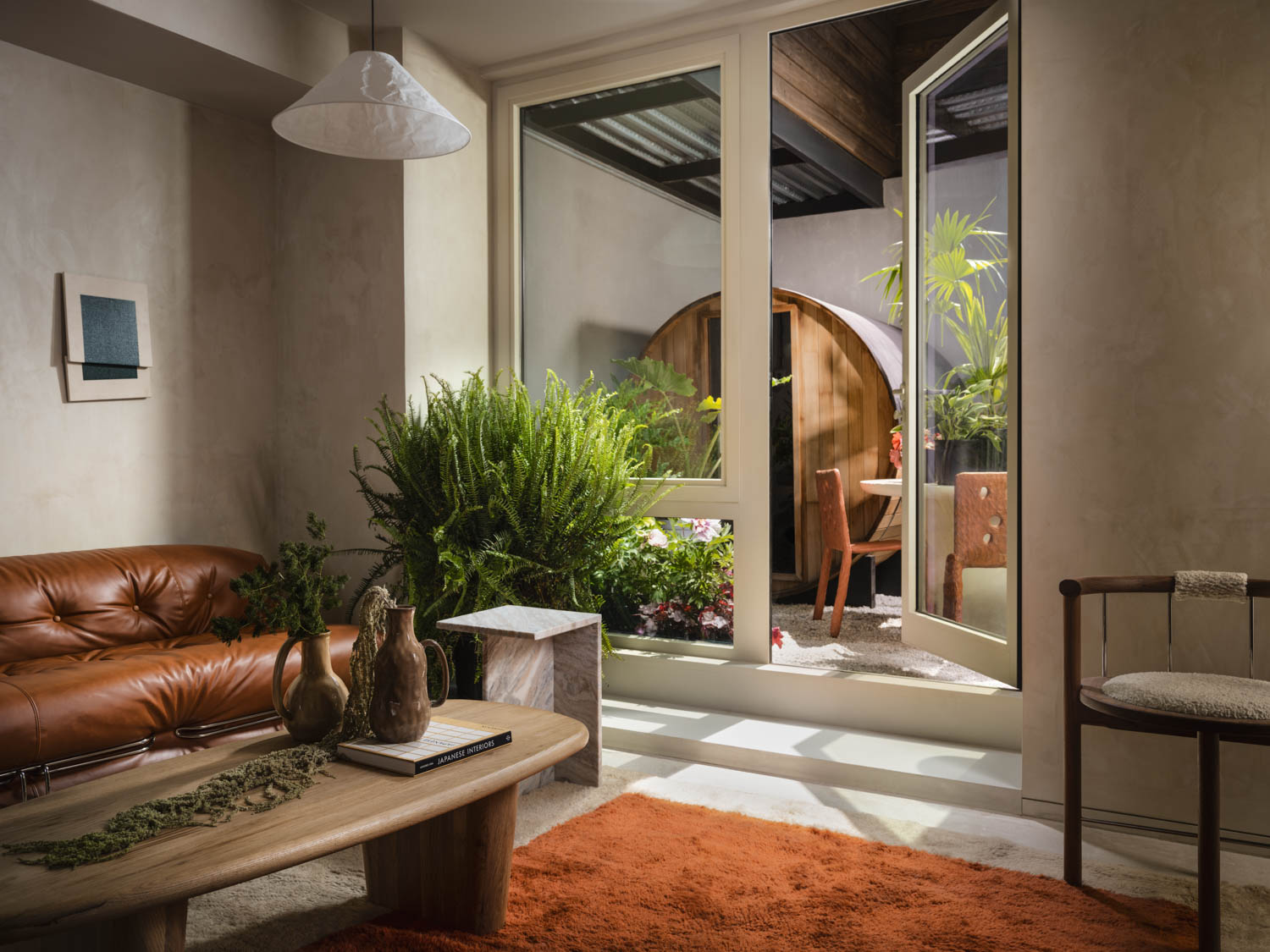
1. Establish the Quiet of the Forest
Forests are immersive because they are inherently balanced. Their acoustics are gentle, their colors are muted but layered, and every surface feels texturally alive. Begin by quieting reflective disruption. Swap sheen for matte. Replace clatter with cushioned calm. Allow surfaces to absorb rather than reverberate light and sound.
Short thought: stillness matters.
Longer thought: A room that visually absorbs wavelengths through natural pigments also perceptually softens ambient noise, creating a psychoacoustic illusion of sanctuary.
2. Curate an Earthbound Chromatic Story
The hues of the forest are low in chroma, high in nuance. Think humid bark, lichen-speckled stone, wet earth after rain, seedpod brown, fog-lulled green. Avoid oversaturation. Let color behave like a quiet backdrop rather than a focal note. Wall tones inspired by forest morning fog or late-afternoon under canopy have a way of expanding space while relaxing the eyes.
Keep the palette faithful to nature’s restraint.
3. Layer Organic Textures With Tactile Truth
Texture in a forest is layered by necessity, never by pretense. Introduce materials that feel honest to the senses: untreated timber, woven jute, unsealed ceramics, stone composites with a soft mineral blur, flax linens, cotton canvas, natural fiber throws. These are your tactile narrators. They tell the story without noise.
A handcrafted irregularity is an asset. Not a flaw.
To amplify calm further, use large rugs of sisal or jute to anchor the floor visually and soften footfall sounds. Wall tapestries or draped linen panels can mimic the porous nature of forest terrain, adding depth and an undeniably rooted feel.
4. Sculpt With Wood, But Speak in Whispers
Wood is the lexicon of forest-inspired spaces, but its grain should speak subtly. Choose pieces with quiet patinas or gentle imperfections. A live-edge side table or a softly sanded oak bench adds narrative without inducing visual commotion. The goal is warmth, not distraction.
A single plank of natural wood can outperform five ornate decor pieces.
Less truly becomes more.
5. Infuse Biotic Elements for Sensory Reassurance
Plants are not an accessory here, they are a spatial instrument. Instead of scattering many small plants, choose a few architectural greens: a tall palm, broadleaf ficus, or eucalyptus sprigs softened in tone. Think verticality. Think presence. Let them behave like trees framing a hiking trail, guiding the eye in restful motion from one point to the next.
Leafy silhouettes soothe faster than floral complexity.
Tip: propagate stem cuttings in reused glass or clay vessels for a gentle interior punctuation that feels alive, enduring, and intentional.
6. Harness Daylight Like a Filtered Canopy
Forests are luminous because light is filtered, not direct. Create the same optical gentleness by applying sheers or unbleached linen drapes to windows. This dilutes daylight gradually, mirroring the soothing diffusion of sunbeams weaving through branches. If you use lamps, keep them warm and quiet.
Position lamps asymmetrically to create soft triangles of light. This prevents rigidity.
Don’t divide the room with light. Let it pool softly.
7. Integrate Stone and Clay for Grounding Resonance
Forests stretch down, as much as they stretch up. Bring in that grounding resonance with decor or surfaces that nod to geology. Consider clay planters, earthen vases, unsealed stone ornaments, or travertine-adjacent textures. These materials visually absorb and stabilize energy in a way that feels deeply primal, but beautifully minimal.
They connect you back to the forest floor.
8. Prioritize Spatial Flow Over Ornamentation
A forest trail flows around trees. It does not fight them. Arrange your furniture the same way, creating natural pathways across the room. Allow intentional negative space to behave like breathing room between trunks. The result is intuitive calm.
Design for wandering eyes, not racing ones.
9. Add Scent as an Invisible Narrative
A forest-inspired room must satisfy more than the visual sense. Light essential oils or subtle resin-based room fragrance can evoke forest memory faster than visual design alone. Notes of cedarwood, pine, or damp earth tinctures work beautifully when used sparingly. Remember, ambiance is layered, not loud.
10. Celebrate Impermanence and Slow Living
Forest retreats feel restorative because they mirror the slow, steady pulse of nature. This philosophy makes your home feel less manufactured, more experienced. Embrace materials that age gently. Reuse decor where you can. Let imperfections carry story.
The beauty of a forest lives in its cycles. Not its symmetry.
11. The Final Effect
A forest-inspired interior should feel inevitable, sensory-soft, and quietly profound. It should mirror nature’s calming cadence, without artifice or excess. When everything comes together, the room reads like calm, slow breath, natural tactility, and gentle diffusion of light.
It feels like retreat. It feels like home.

More Stories
Cozy Roots: Designing Home Sanctuaries with Nature’s Palette
Biophilic Home Design: Bringing Nature Indoors for a Healthier, Happier Life
5 Ways to Bring the Outdoors Inside with Biophilic Home Design